
Automotive safety engineering has never been more advanced or more complex.
New vehicle architectures, evolving regulations, and increasingly sophisticated test devices are raising the bar for crash safety validation. Yet many safety certification laboratories still rely on fragmented workflows and legacy equipment. Workflows and equipment designed for a different era.
In this article, we’ll share ways to streamline your lab. You don’t, and probably can’t, do everything at once. So here are steps you can take over time.
The Problem: Fragmented Workflows and Disconnected Systems
Historically, ATD certification labs have relied on single-purpose rigs, manual configuration, and disconnected data management. Each test often requires technicians to move dummies between stations/rigs and manually record the resulting data.
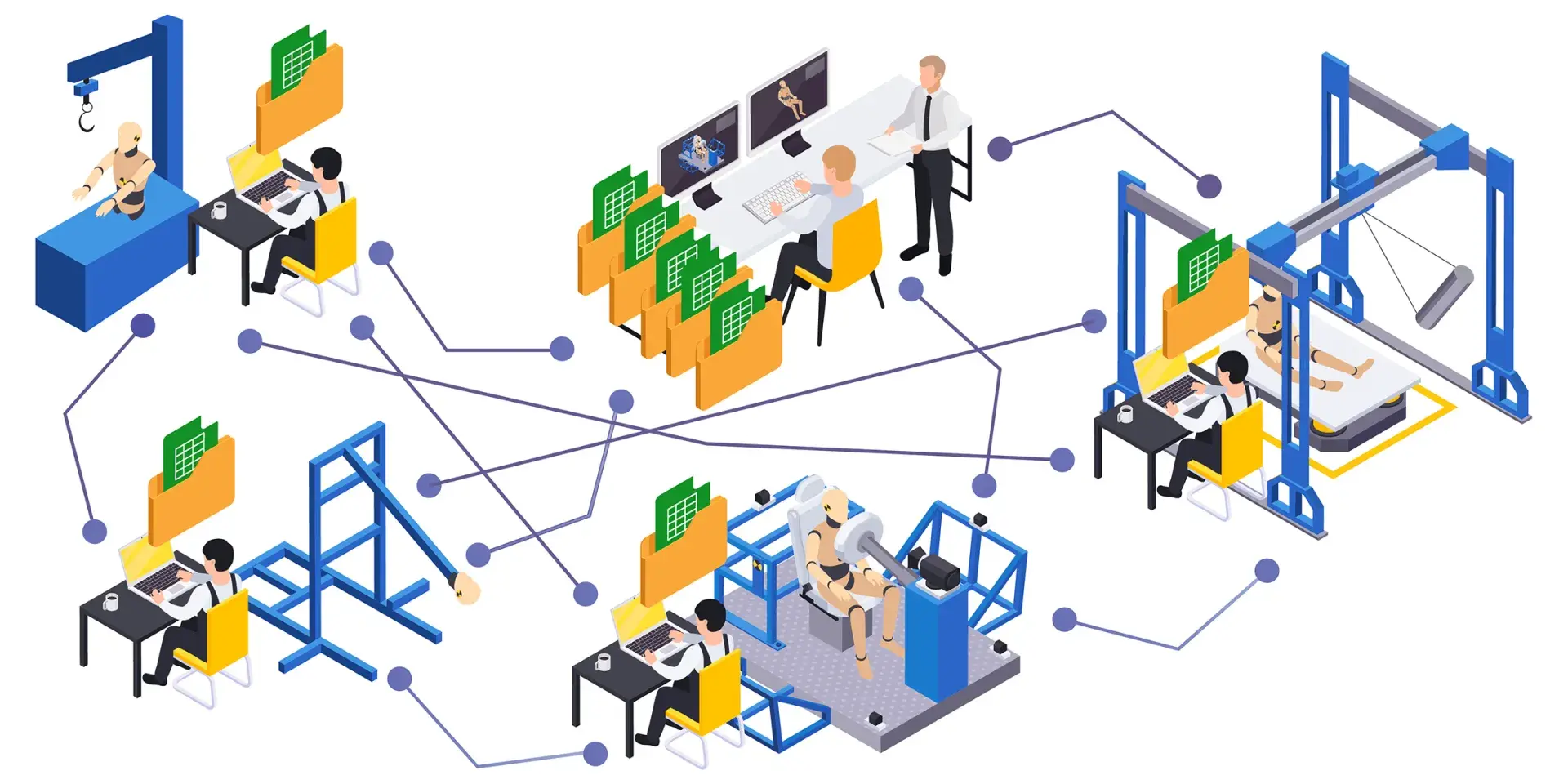
This introduces inefficiencies that get more difficult to manage as test programs (and regulatory requirements) grow in complexity.
There are other long-term challenges that factor in how labs operate.
Expensive Space Requirements
Traditional lab equipment requires large spaces and complex infrastructure. Things like tall ceilings and large isolated rooms with temperature and humidity controls. This means labs often require expensive specialized facilities. This is especially true for labs certifying and maintaining Next Generation ATDs like THOR and WorldSID.
Protecting Current Investments
Equipment and software are always improving. Who wouldn’t want to buy the new latest and greatest test equipment each year? But the reality is that you need to make the best use of your current investments.
What if there were a way to implement improvements over time?
The Solution: Retrofit Your Lab Incrementally
The next generation of test lab fixtures and systems are changing everything. They combine modern hardware design, integrated software, and connected data systems.
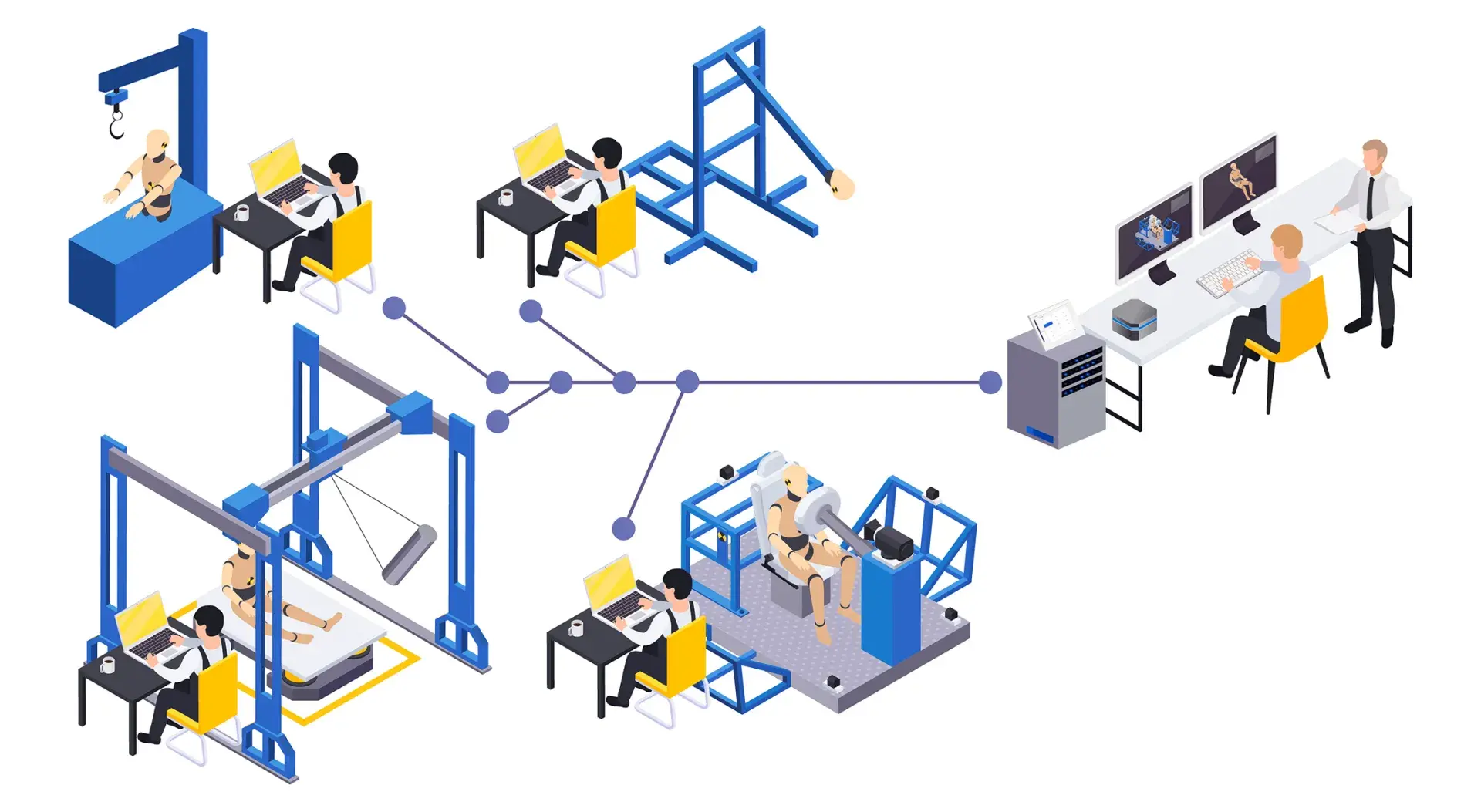
You have proven first generation systems. They still work. But they might be slowing you down.
One solution is to enhance these proven systems with modern capabilities. You can do this without significant investment.
Retrofitting, one step at a time, allows you to:
- Extend the lifespan of proven and reliable systems
- Acquire data, process data, and generate ISO-complaint certification reports in a single click
- Improve operational efficiency and expedited training of new employees with user-intuitive workflows
- Centralize and integrate data management to enable actionable insights
The result is an ATD lab environment that can keep pace modern safety demands, and move towards outpacing them.
With the retrofit solution, labs can operate with greater efficiency, improved quality, and confidence in test results. At the same time protecting and fully utilizing your existing investments.
Steps for Streamlining: One at a Time
Here are ways to enhance and retrofit your traditional certification equipment with Connected Lab solutions.
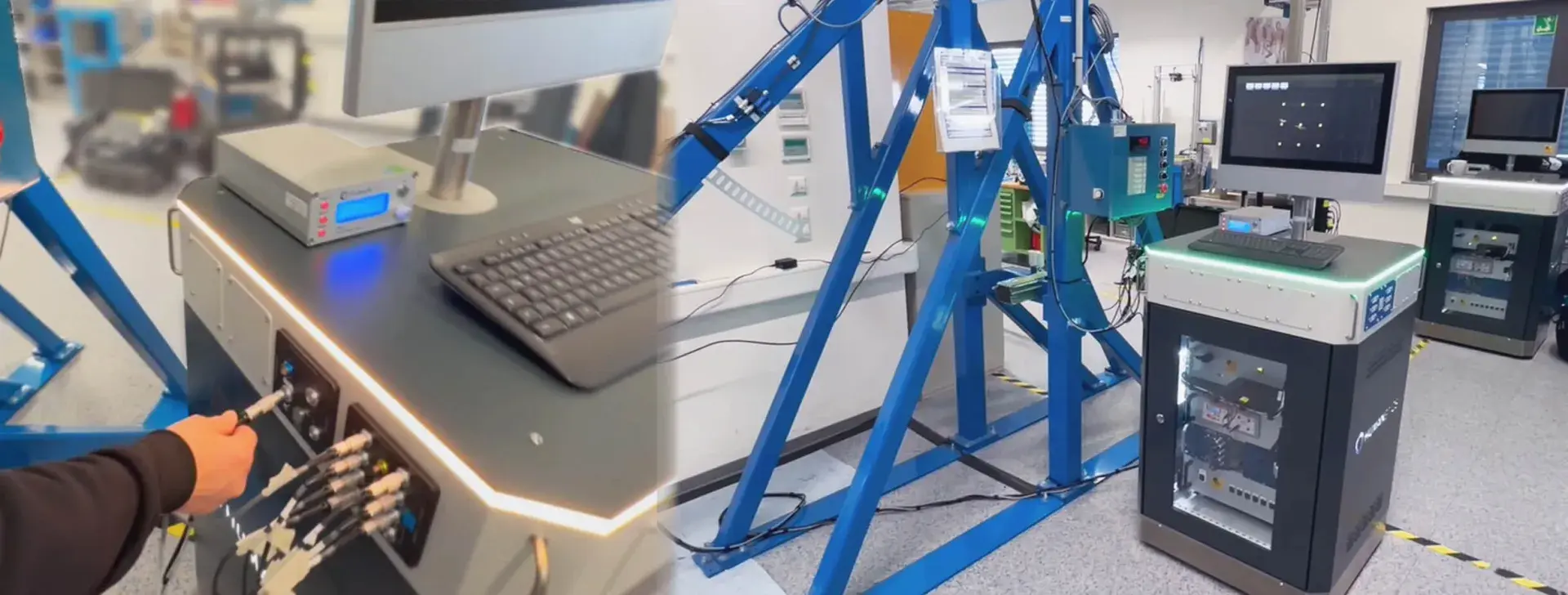
1: Extend System Lifespans with Connected Data Upgrade
Modern certification systems are not defined by hardware alone. You gain efficiency when you integrate hardware into a connected software ecosystem.
Instead of tracking critical laboratory data across multiple spreadsheets and disconnected systems, laboratories can leverage a singe centralized and integrated digital platform for:
- Centralized data management
- Data analysis and troubleshooting
- Real-time tracking of ATD metrics
- Scheduling of ATD certifications and events
- Management of critical spare parts inventory
- Monitoring of ATD and component lifecycles
- Organized sensor settings and configurations
- Simplified compliance management
By integrating existing lab equipment with Connected Lab Data Management, you'll get greater greater transparency, traceability, and operational efficiency across your entire process.
Aggregate data with ATD Connect®
There are multiple paths to implementing a Connected Lab. The goal is to do unified testing. By getting all your data into ATD Connect® you’ll have data management for your entire ATD fleet. You can make use of remote insights and improve your utilization across all test systems.
There are the basic paths. Each one involves using Data Connect Storage. This adds centralized, secure data management to your existing equipment and integrates with ATD Connect®. The paths are: Base, Enhanced, and Advanced.
Retrofit Base
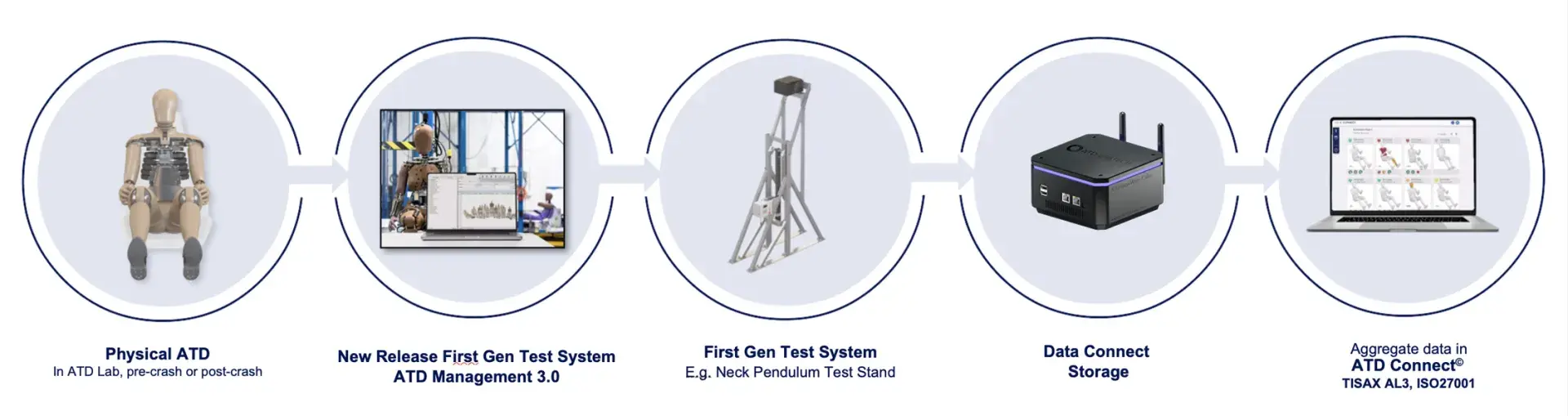
With the Retrofit Base path, leverage ATD Management version 3.0. to automatically inject certification data into ATD-Connect® via a connection with the Data Connect Storage.
Retrofit Enhanced
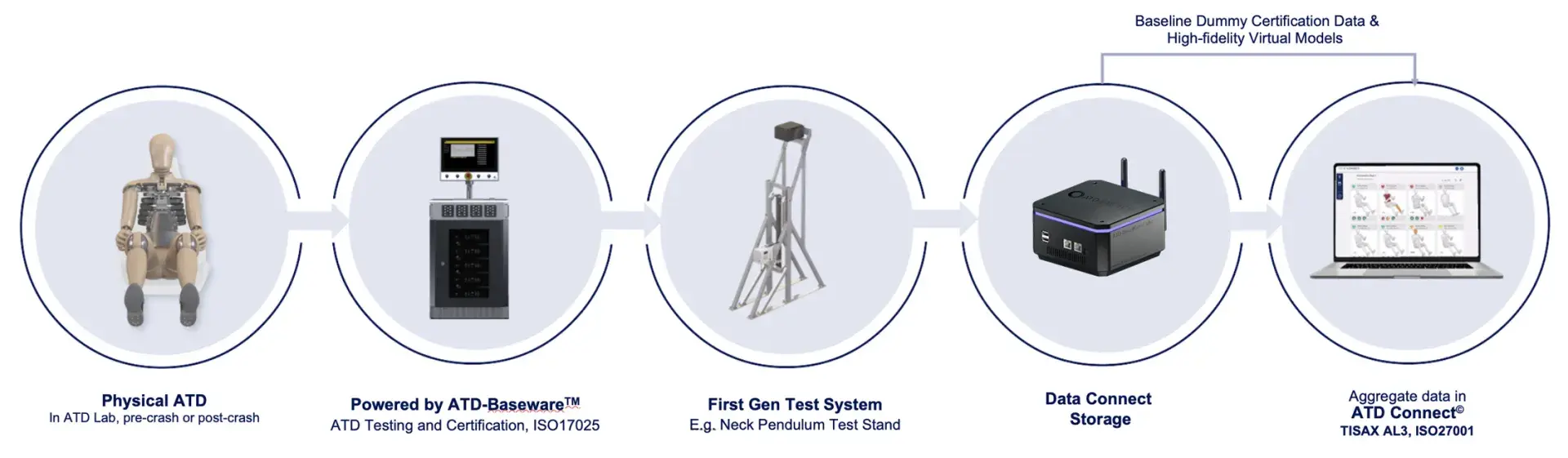
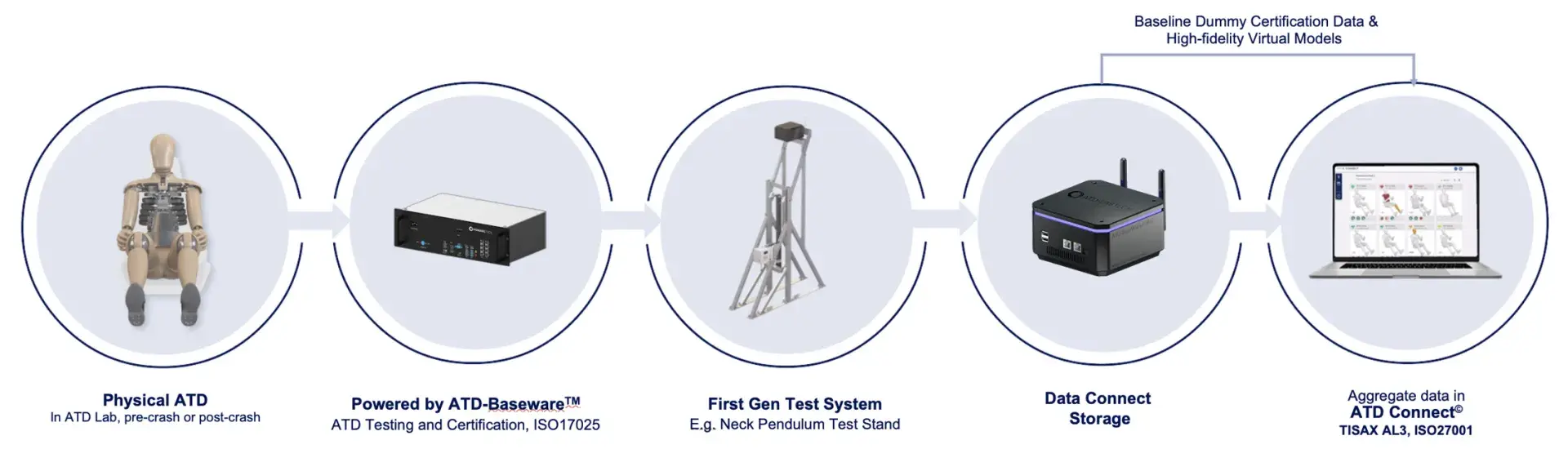
To implement the Retrofit Enhanced, integrate a Rack or HeadUnit with your existing test equipment and leverage the quality and user-friendly features of ATD-BaseWare™ with automatic data injection to ATD-Connect®. The Retrofit Enhanced configurations will transform your existing setup into an integrated and connected data management system. You'll get ISO-compliant data collection to report generation, centralized data management, and seamless integration of multiple devices.
Retrofit Advanced
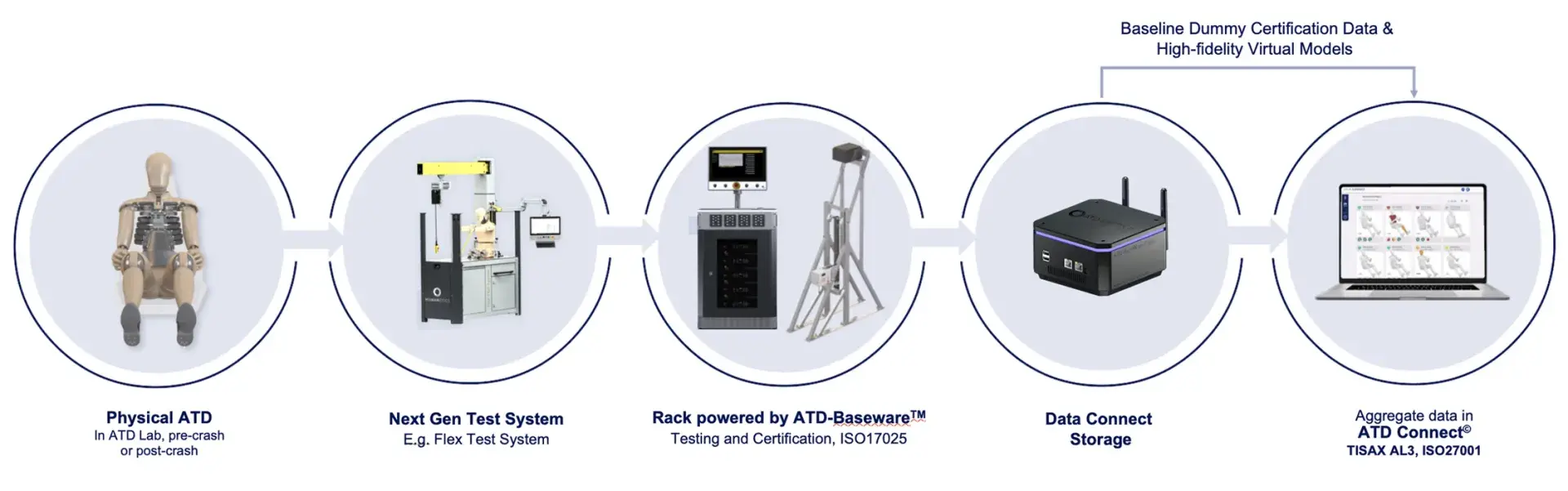
The Retrofit Advanced path involves integrating any aspect of the Next Gen Test Systems into your existing laboratory. This could be a pendulum deceleration system, Flex Test System, or several of the Next Gen Test Benches, while still utilizing your traditional equipment all in an integrated ecosystem. Learn more about the Next Gen Test Systems in step 3 (Build a More Human-Centered Lab).
2: Implement Connected Lab Management
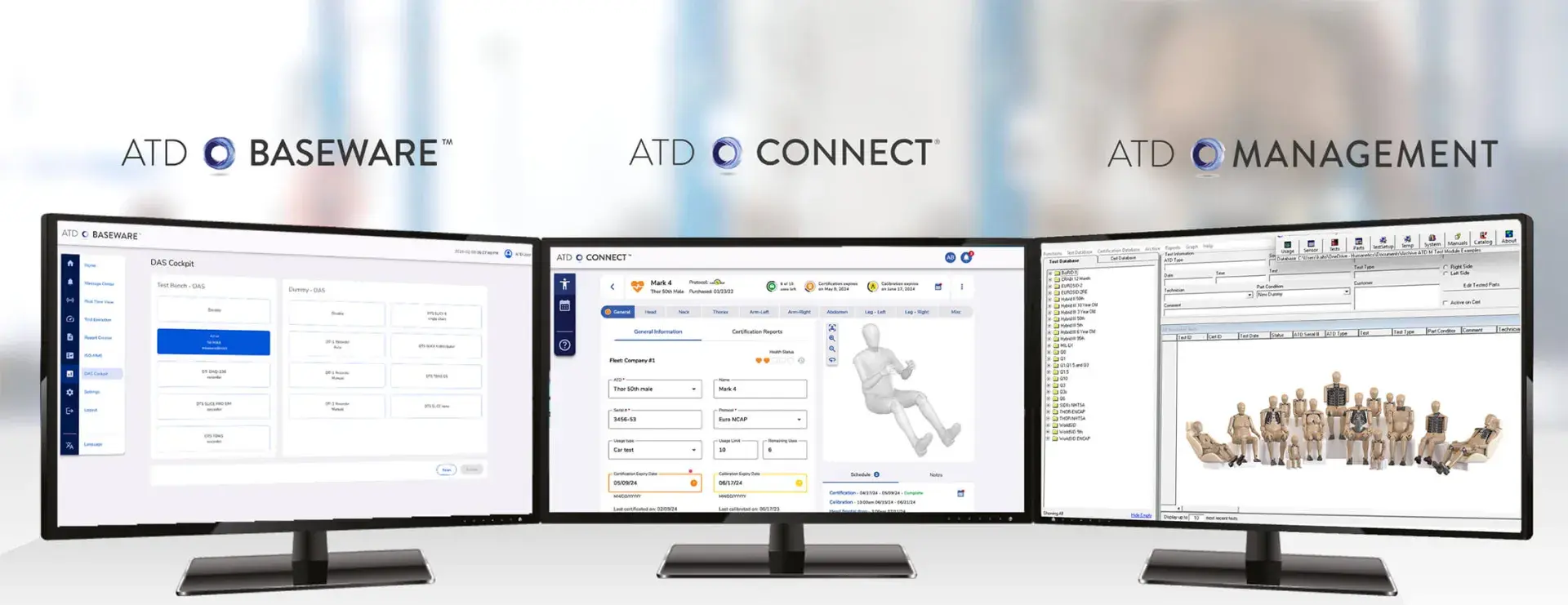
If you're one of the many laboratories using Humanetics' legacy certification software, ATD-Management, you can upgrade to version 3.0 to enable integration with ATD-Connect®. With ATD-Management 3.0, you can:
- Collect and process data
- Generate certification reports
- Automatically inject data into ATD-Connect®
ATD-Management 3.0 delivers improved stability, enhanced security, corridor updates, regular maintenance and updates, and improved support.
Interested in More Content Like This?
Subscribe to the Humanetics Pulse newsletter to learn more about Humanetics Products, News, and Industry Updates.
ATD Management users can also choose to upgrade to ATD-BaseWare™. With ATD-BaseWare™ you can do more than just collect data and generate reports. It simplifies and accelerates the ATD certification process while improving data quality through:
- An integrated workflow from data acquisition to ISO-compliant report generation
- User-friendly and guided processes
- Live data display for on-the-spot troubleshooting and rapid post-test data analysis
- Compatibility with multiple data acquisition system types
- Reduced lab-to-lab variability via a single, unified platform for data acquisition, analysis, and reporting
3: Build a More Human-Centered Lab Experience
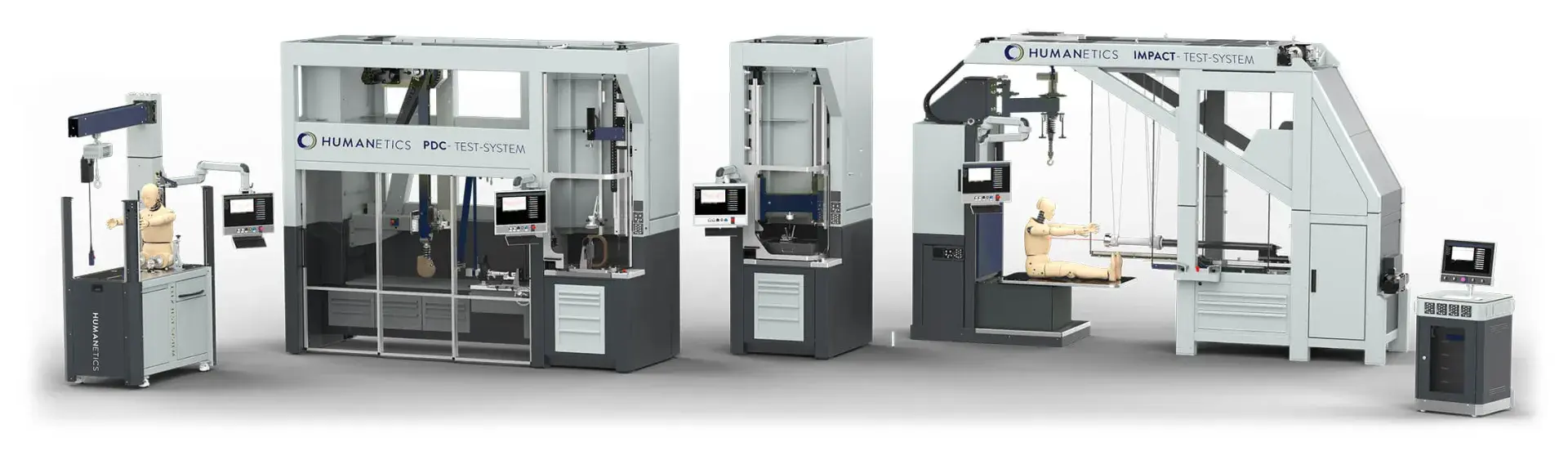
The ultimate path for solving fragmented workflows, disconnected systems, and the inevitable challenges of certifying advanced ATDs at a rate to meet regulatory demands and expedited vehicle development cycles is with the Next Gen Test Systems. As your lab realizes the operational efficiencies and quality improvements of the retrofit options, and as advanced ATDs become standard in regulatory and consumer rating tests, the time will come to set up the Next Gen Test Systems.
Next Gen Test Systems incorporate advanced technology to reduce variability, improve reproducibility, and streamline ATD certification by up to 33%. With these standardized systems, organizations can standardize procedures across global teams while improving productivity and workplace safety. Machine control is handled through ATD-BaseWare™ to further consolidate applications and centralize certification processes into a single, user-friendly platform.
When repeatability and reproducibility are a necessity, usability is not a luxury, but a performance advantage. As the automotive industry advances towards safer and more complex vehicles that require more tests than ever, ATD certification laboratories must prepare to manage the complexity of advanced ATDs and their significant increase in usage.
Our Next Gen Test Systems:
Key Takeaway: The Lab of the Future Must Be More Efficient and Connected
The implementation of advanced ATDs in regulatory and consumer rating testing, in combination with an optimized process for developing new ATDs like the EvaRID, is changing how labs must manage and certify their crash test dummies.
It's now possible to upgrade to a Connected Lab through a multi-phase retrofit approach that will leverage existing test equipment and capital investments while improving laboratory operations to incrementally prepare for the future demands of ATD labs.
By integrating your current test equipment with Connected Lab management tools, you will build a foundation for the future. Initiating these phases now ensures your lab will meet the expanding demand and complexity of ATD certifications.
You’ll also strike a balance between planning for the future and working with what you have now, moving toward a smarter certification environment that supports faster development cycles, stronger compliance, and safer vehicles.
Keep Learning
We have more resources and experts ready to help you improve or build your ATD certification lab.
Speak to an Expert
Learn how you can improve your safety certification lab, step-by-step, in a way that works for your organization.
Frequently Asked Questions (FAQs)
What is the IATF16949 standard?
IATF16949 is the International Automotive Task Force (IATF) global technical specification for quality management. It defines a set of standards for setting up and certifying a QMS (Quality Management System) for manufacturing.
What is the ISO17025 standard?
ISO / IEC 17025 is an International Standards Organization (ISO) standard for testing and calibration laboratories. Using the guidelines, companies can certify that their lab produces valid, accurate, and repeatable results.

Austin Kelly
Austin Kelly is a Product Manager at Humanetics Group, a global leader in safety technology, anthropomorphic test devices (ATDs), and digital human modeling. He is responsible for leading the development and execution of the Connected Lab, working closely with software development, engineering, and our global customers to deliver high-quality solutions.