
The growing challenge of designing for real people
Designing for real people, with all their size variation, has always been complex. This complexity is only increasing. Body dimensions across populations keep shifting because of changes in lifestyle, nutrition, and demographics.
In this article, we’ll show you how to use real-world 3D body scan size survey data. It can help protect your brand reputation and increase profits.
The Problem: Conventional Size Survey Data Falls Short
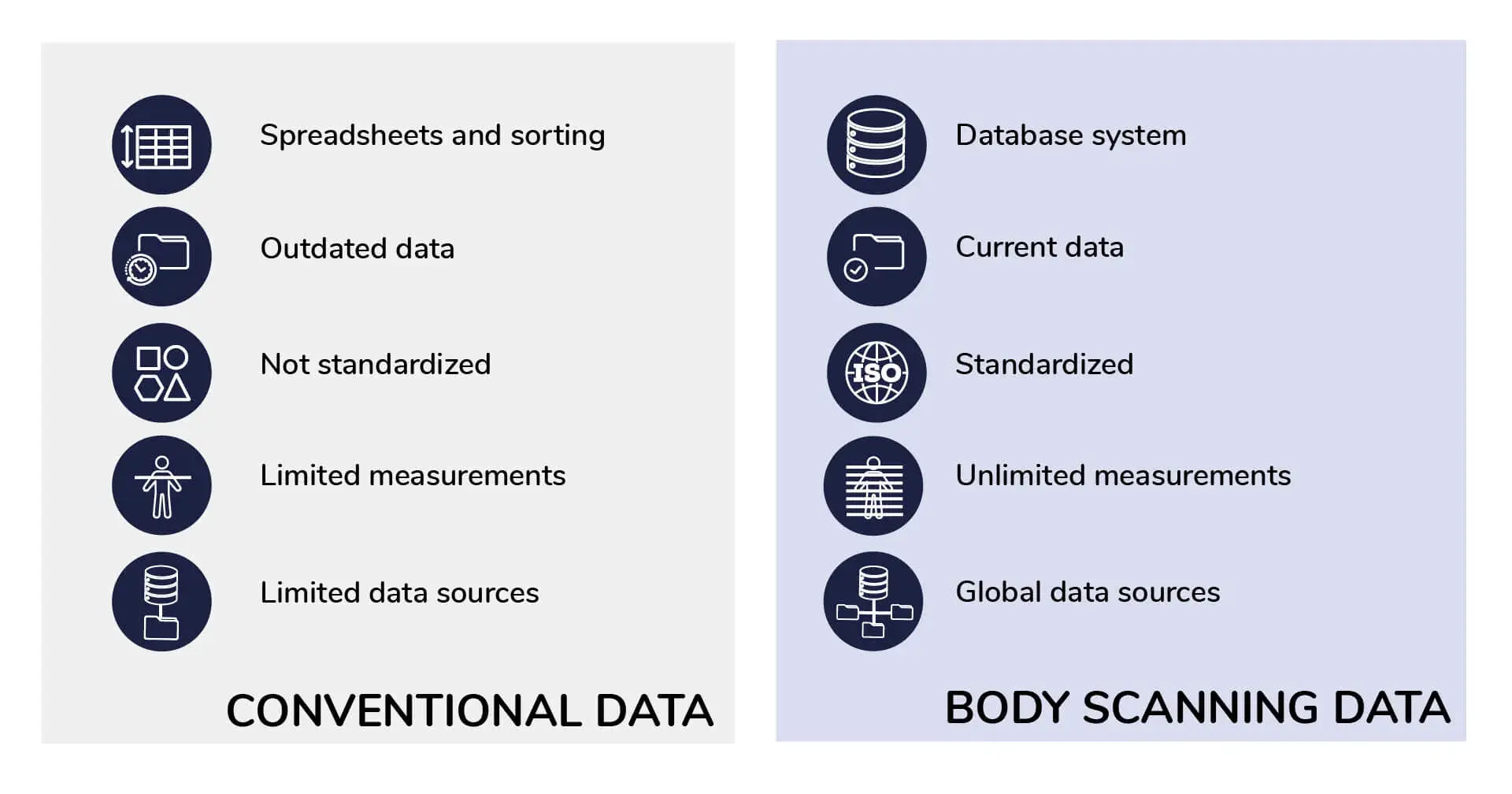
For designers and product developers, conventional data sources are limited and outdated. This creates a fundamental challenge. Products developed using outdated or incomplete anthropometric data (body data) risk not working for real users.
The consequences range from mismatched size and fit to safety concerns and decreased market acceptance (less profit).
At the same time, global markets require products to accommodate diverse populations across regions, age groups, and genders. This amplifies the need for accurate, current, and representative body data as a foundation for design decisions.
Traditional body datasets often rely on manual measurements collected years ago (or even decades ago). These datasets have supported product development in the past, but they struggle to keep pace with evolving populations. This data won't help you get happy customers.
Outdated datasets cannot capture ongoing shifts in body shape and proportions. They also lack the depth required to analyze complex geometries for modern product interaction. As a result, they limit what you can do.
With traditional body datasets it is harder to:
- Create accurate sizing systems
- Confirm ergonomic performance
- Improve product fit
In addition, inconsistent data collection methods across regions make it difficult to compare datasets. Applying this data in product development workflows is also difficult. This creates fragmentation in design processes and increases the risk of incorrect assumptions.
The Solution: Using Accurate and Updated Size Survey Data
3D body scanning addresses these limitations. It enables high-resolution, digital capture of human body shape, size, and proportions at scale. Instead of relying on limited manual measurements, engineers gain access to comprehensive datasets that reflect real human variation.
Large-scale initiatives such as SizeEUROPE, Size NorthAmerica, and SizeWorld CHINA demonstrate how 3D body scanning can be applied widely across populations. The survey captures detailed 3D body scans alongside demographic information, creating a robust dataset that reflects geographic and cultural diversity.
This approach provides several key advantages for product development:
- Up-to-date insights into body size, shape, and proportions
- Comparable datasets across countries, genders, and age groups
- Improved understanding of population trends and body development
- A reliable foundation for applied ergonomics, sizing systems, and design decisions
By combining 3D scanning with structured sampling methods, such initiatives ensure that datasets are both accurate and representative. This is essential for translating data into actionable insights.
Proven Tips for Using 3D Body Scan Size Survey Data
Using size survey data helps your product or service work for more people. This can boost your reputation and lead to more profit. Here are some proven ways to use body data in the early stages of your product development.
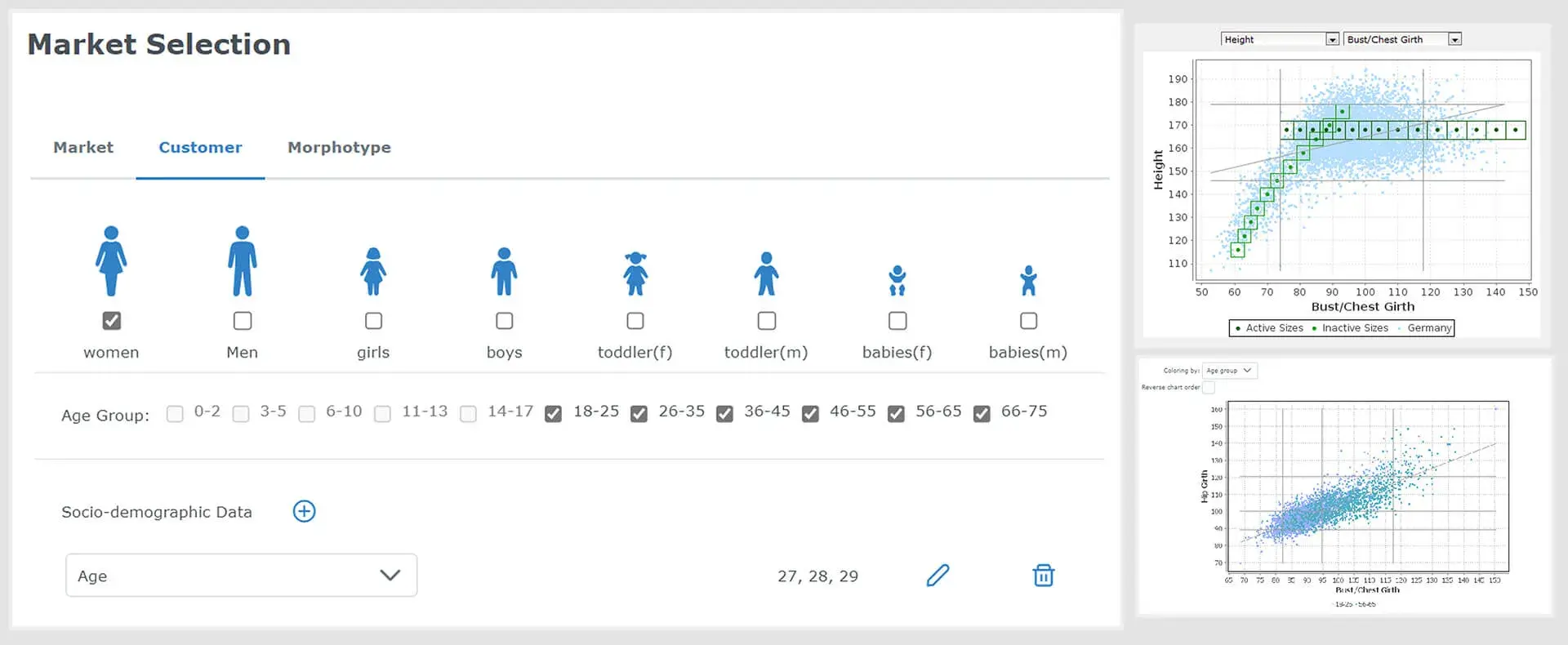
Use a Representative Body Dataset to Improve Product Fit
A large, representative dataset enables you to design products that align more closely with real users. This improves fit, comfort, and usability while reducing the need for late-stage adjustments. In apparel, this leads to more precise size systems and improved customer satisfaction. In automotive and other industries, it supports ergonomic design for safety and performance.
Access to detailed body shape information also allows for deeper understanding of human body variation. You can evaluate how products fit within different population segments or different body shapes.
This data-driven approach reduces reliance on assumptions and enables more confident decision-making throughout the design process.
Integrate 3D Body Data Into Your Workflow
To make the best use of 3D body scanning, data must be accessible within your design or engineering environment, app, or software stack.
Humanetics supports cutting edge engineering with platforms like as iSize and RAMSIS. With these apps, body data can be analyzed and applied in digital product development workflows.
Within these environments, engineers and designers can explore population data, simulate user interactions, and evaluate product fit virtually. You can shift from reactive to proactive design.
You'll be able to consider ergonomics early and throughout development.
With integrated data collaboration across teams, you'll have a shared, data-driven reference for human-centered design decisions.
Interested in More Content Like This?
Subscribe to the Humanetics Pulse newsletter to learn more about Humanetics Products, News, and Industry Updates.
Use Body Data to Understand Your Customers
Using accurate size survey data to improve product fit is not only a technical objective. It has direct implications for business performance and success.
When you use real data you can better understand your customers.
Products that align with real people's dimensions are more likely to be fitting, usable, and safe. This reduces return rates, increases customer satisfaction, and strengthens brand perception. Poor fit can lead to reduced profits and damage your reputation.
3D body scanning and up-to-date size survey data also support inclusive design. It enables products that accommodate a wider range of people. This is increasingly important as populations become more diverse and customers expect more options.
Ground your design decisions in accurate data. You'll improve your product development and sales. Less uncertainty and reliable product performance will benefit all customers.
Key Takeaway: Size Survey Data Is Foundational
3D body data size surveys reshape how product fit is understood and achieved in modern engineering. Data that is accurate, detailed, and up-to-date enables you to truly practice human-centered design.
Initiatives such as SizeEUROPE, Size NorthAmerica, and SizeWorld CHINA highlight the importance of continuous data collection that will work for evolving populations. When combined with digital platforms like iSize and RAMSIS, this data becomes a powerful driver of better design decisions.
Accurate body data is no longer optional. It is a foundational element of designing products that fit, perform, and succeed.
Learn More
We have more body data resources for you as well as experts ready to assist you with your next project.
Talk to an Expert
Speak with a Humanetics expert about integrating 3D body data into your development process.
Frequently Asked Questions
What is a Size Survey?
A Size Survey is a large-scale collection of accurate body data. Modern size surveys use advanced 3D body scanners and sociodemographic data collection.
Designers use the resulting data to make clothing that fits better. Engineers and ergonomists also use data to make safer products and vehicles. Humanetics has run size surveys for over 20 years. It integrates the world’s largest body dataset in its hardware and software products.
What is anthropometric data?
Anthropometric data (body data) is a system of standardized data about the human body's physical characteristics. Designers of all sorts use this data to improve products for potential customers:
- Clothing, fashion and, couture
- Personal protective equipment (PPE)
- Ergonomics (digital ergonomics)
- Vehicle safety (crash testing)
- ...and more
What is 3D body scanning?
3D body scanning is a technology that captures the precise shape and dimensions of the human body. Modern 3D body scanning often uses optical and depth sensing technology.
Many product designers in many industries use 3D body data:
- Fashion and apparel (fit forms)
- Automotive and vehicle designers (ergonomics and crash safety design and simulation)
- Retail
- Healthcare
What is SizeEUROPE?
SizeEUROPE is a large-scale anthropometric survey (size survey). It collects up-to-date 3D body scan data across multiple European countries. The survey captures detailed information on:
- Body measurements
- Body shape and proportions
- Socio-demographic variables
The goal is to actively reflect the diverse populations of the Europe.
What is Size NorthAmerica?
Size NorthAmerica is a large-scale long term anthropometric survey. It collected up-to-date 3D body scan data across USA and Canada. The survey captures detailed information on:
- Body measurements
- Body shape and proportions
- Socio-demographic variables
What is SizeWorld CHINA?
SizeWorld CHINA is a large-scale long term anthropometric survey. The study collected data of the Chinese population. The survey captures detailed information on:
- Body measurements
- Body shape and proportions
- Socio-demographic variables
What is iSize?
iSize is powerful software for data-driven design. It empowers your design workflows by integrating largest body measurement database in the world. It helps you make products that fit your customers.
What is RAMSIS?
RAMSIS is the global standard app for ergonomic vehicle design. It integrates the largest anthropometric database in the world into your design workflows. It can help you design for the best posture, movement, reachability, flied of vision.
RAMSIS is used by large automotive and aerospace companies. It's also increasingly being used by shipbuilders, industrial vehicle makers, and other industries.
It's available as a standalone Windows app or a module in CATIA V5, Siemens NX, and 3DEXPERIENCE.

Anke Rissiek
Anke is the Global Product Manager and Business Development Lead at Humanetics for Body Data, with over 30 years of experience in sizing strategy and fit development. She specializes in translating measurement data into size tables, 3D avatars, and fit forms, helping brands create target group-specific sizing concepts that drive business success. Anke also serves on the International Association of Clothing Designers & Executives, working with industry leaders worldwide on sizing trends and standards.