
The Hidden Complexity Impacting Your Data Integrity
Crash testing has always been the cornerstone of vehicle safety. But safety engineers have a nagging problem: hidden complexity.
The hidden complexity is managing fleets of anthropomorphic test devices (ATDs, or crash test dummies).
- Tracking certification cycles
- Calibrating hundreds of sensors
- Ensuring regulatory compliance across global protocols
- Monitoring spare parts inventory
- Assigning ATDs to scheduled events
- Analyzing test data and gathering rapid insights
This is more than an operational overhead. These tasks are critical for high-quality data, valid tests, and safety outcomes.
As vehicle systems evolve, the demands on the crash lab are increasing. You have more tests, more data, more variables, and more pressure to move faster. You must still protect data quality and traceability.
In this article we'll share best practices for improving your ATD data management. You'll learn how to go from data silos and gaps to an integrated test software system.
Table of Contents:
The Problem: Data Fragmentation and Gaps
In many labs today, critical processes remain fragmented.
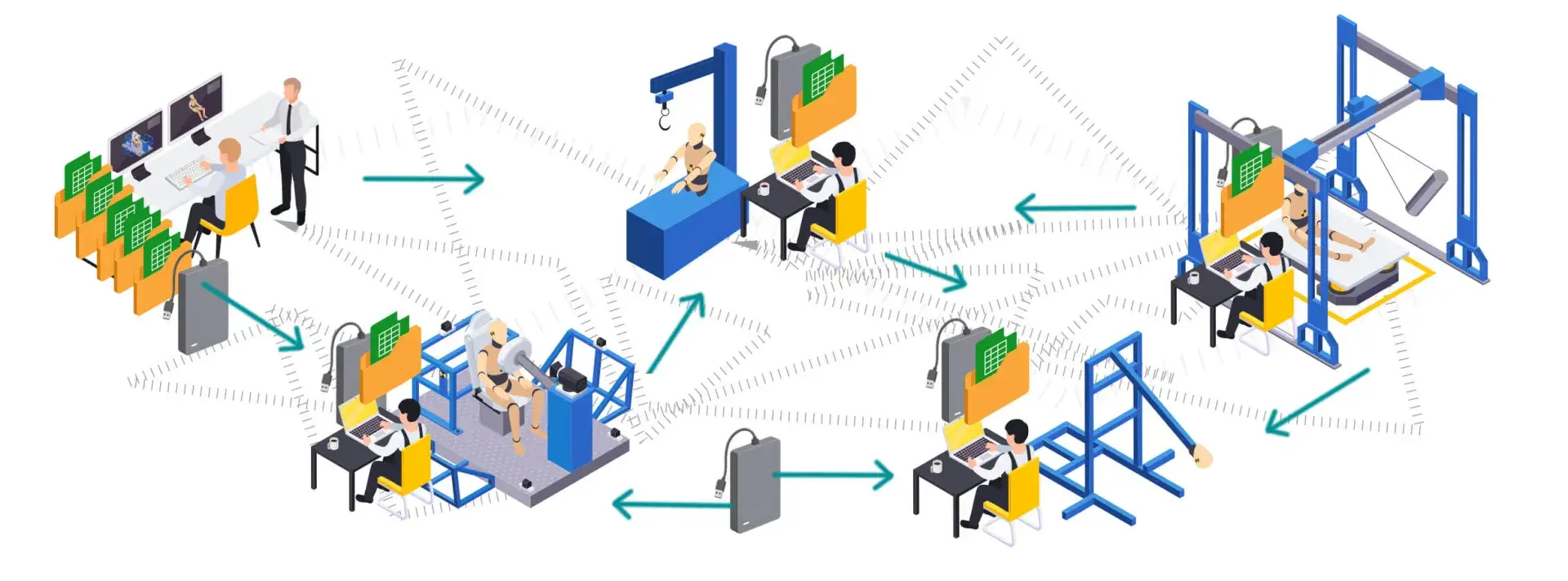
Certification records are tracked in separate systems:
- Sensor calibration data is managed independently
- Test results are stored across multiple platforms
- Inventory and asset availability are often monitored manually
Each of these elements is essential. But when they operate in isolation, you increase risk and reduce efficiency.
- Someone may use an ATD without fully seeing its certification status
- A sensor may drift out of calibration, undetected
- Test data may lack traceability across configurations and components
These are not just operational challenges. They directly impact the integrity of safety data. Without trusted data, safety intelligence cannot exist.
The Solution: A More Connected Lab
The industry is now moving toward a new model: the connected lab (or intelligent lab).
At the center of this transformation are platforms like ATD Connect®. They bring the full lifecycle of crash test devices and real time data into one system.
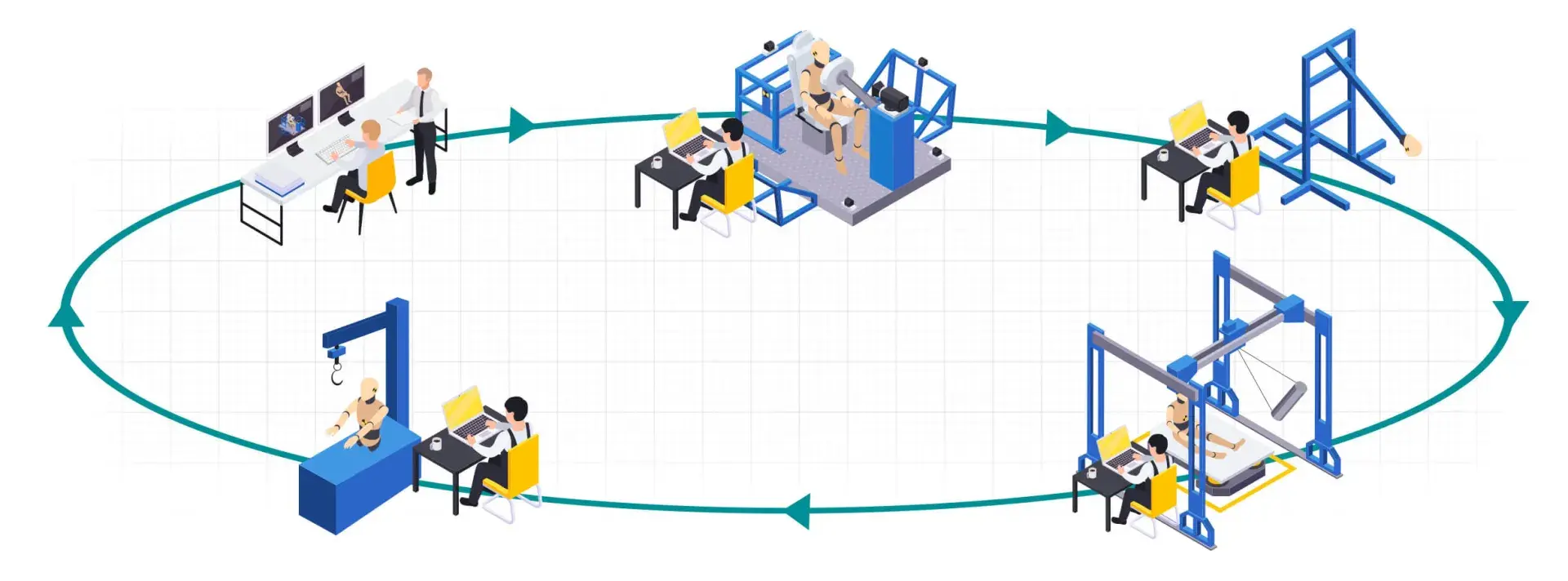
This goes beyond a data repository. ATD Connect® is designed to manage:
- Certification and calibration records
- Dummy configuration and usage history
- Test data and results
- Operational status and readiness
This allows you to build a closed-loop safety intelligence system.
ATD Fleet Management
Consider the challenge ATD fleet management across multiple test programs.
In a traditional environment, engineers and lab managers must manually track:
- When a dummy was last certified
- How many tests it has undergone
- Whether its sensors are within calibration limits
- Whether it is ready for the next test
With a connected platform, this process becomes automated and transparent.
ATD Connect® constantly monitors and evaluates dummy health based on:
- Certification expiration
- Sensor calibration status
- Usage frequency and history
- Certification test results
Each device in the ATD fleet has a clear readiness status, so teams can quickly decide if it is ready for testing.
The result is fewer delays, fewer errors, and greater confidence in every test performed.
Tips for Better ATD Safety Data Management
As lab complexity and test requirements increase, managing individual devices is no longer enough. Here are tips for developing a safety data management system.
1: Increase Visibility Across the Lab
Modern crash labs rely on a wide range of components, from dummy parts and sensors to test equipment and supporting hardware.
Without centralized visibility, labs risk:
- Underusing assets
- Delays due to unavailable components
- Inefficient planning and scheduling
Integrated inventory management enables:
- Real-time visibility into available assets
- Better planning of test programs
- Reduced downtime and improved utilization
2: Watch the Details: Sensor Management
Sensors are the foundation of safety data. Their accuracy determines the reliability of every test result.
Managing hundreds of sensors across multiple devices and test setups is a significant challenge.
By integrating sensor management into a connected lab platform, organizations can:
- Track calibration status across all sensors
- Ensure consistency and compliance
- Identify issues before they impact test results
- Reduce manual entry of sensor settings
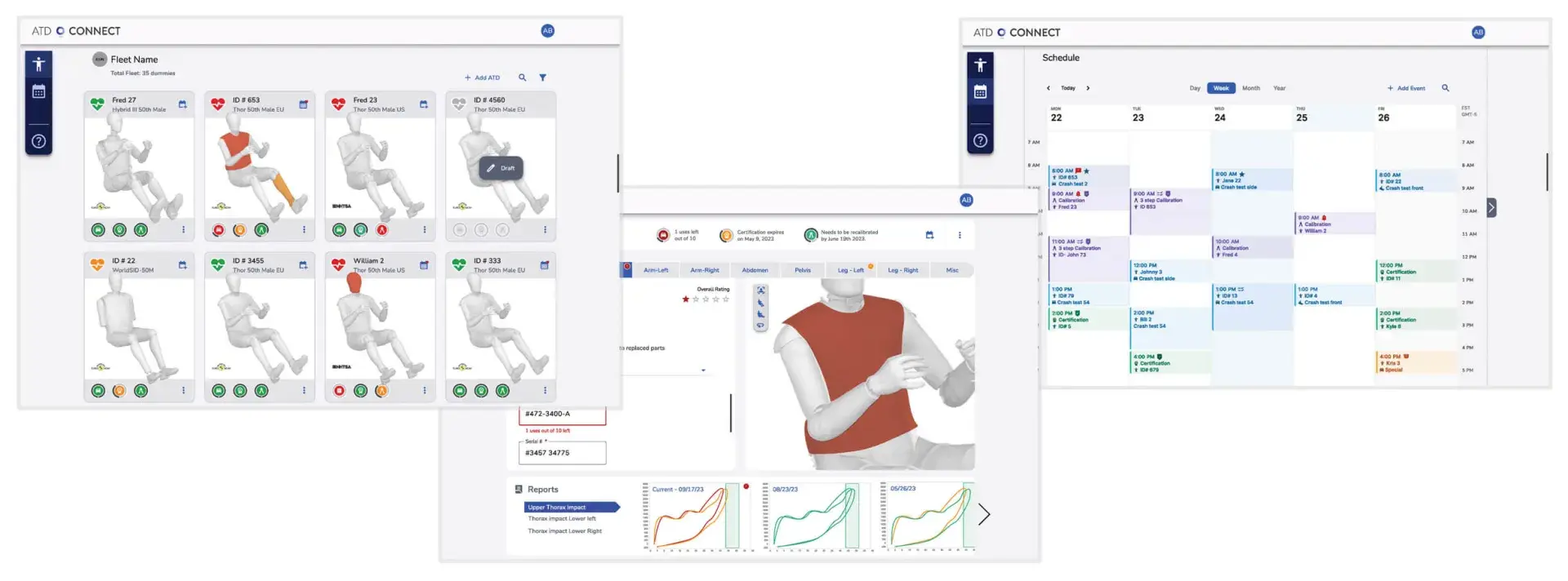
3: Focus on Making Decisions (Smart Analytics Dashboard)
The true value of a connected lab is not just efficiency; it's better decision making.
By organizing data, records, and test results into a smart dashboard, engineers gain:
- Quick visibility into test validity
- The ability to compare historical results
- Faster root-cause analysisGreater confidence in regulatory compliance
Your goal should be to move beyond manual work to insights and decision making.
This accelerates development while improving reliability.
4: Enable Faster Collaboration
Often, modern safety development does not happen in one location. Crash labs, proving grounds, and simulation teams must work together, often across regions or countries.
Find ways to enable faster collaboration. Usually cloud-based systems can help with operations like:
- Centralizing data storage in a secure environment
- Scaling across multiple labs
- Reducing operational costs
- Consistent data and reporting
- Reducing lab-to-lab variability
This supports a more integrated approach to safety development. A cloud-based system lets teams share insights and take action.
Interested in More Content Like This?
Subscribe to the Humanetics Pulse newsletter to learn more about Humanetics Products, News, and Industry Updates.
Key Takeaway: Improved Data Management Brings Strategic Impact
The evolution of intelligent lab platforms reflects a broader shift in the industry. Safety is no longer defined by individual tests. Integrated systems define it.
The connected lab (intelligent lab) is:
- Integrated across devices, data, and workflows
- Transparent in its operations and decision-making
- Scalable to meet increasing complexity
- Aligned with digital and physical environments
Safety Intelligence depends on trusted data. Trusted data depends on controlled, consistent, and well-managed testing environments.
Connected lab platforms like ATD Connect® ensure teams align and clearly track every step in testing. From device readiness to sensor calibration to data management, everything stays visible.
They transform the crash lab from a collection of tools (with gaps in their data) into a system of safety intelligence.
Keep Learning
We have more articles to help you manage your safety lab or experts standing by to help.
Talk to an Expert
Contact one of our safety engineers to learn how we can help you manage your testing environment.
Frequently Asked Questions
What is ATD Connect®?
ATD Connect® is an integrated application for managing ATD fleets and related laboratory operations. It seamlessly links ATD certification data, ATD metrics and critical dates, events, spare parts, requests for quotes, simulation data, and sensor information. It also provides automated insights that enable managers, engineers, and technicians to make quicker, more informed decisions.
What is a "closed-loop process"?
In the context of safety engineering, a closed-loop system or solution seamlessly connects physical and virtual testing. A safety certification test uses a physical dummy to generate data. This data feeds into a real-time digital twin of the dummy for continuous improvement.

Austin Kelly
Austin Kelly is a Product Manager at Humanetics Group, a global leader in safety technology, anthropomorphic test devices (ATDs), and digital human modeling. He is responsible for leading the development and execution of the Connected Lab, working closely with software development, engineering, and our global customers to deliver high-quality solutions.